Factory or Trading Company? How to Tell Who Really Produces in China
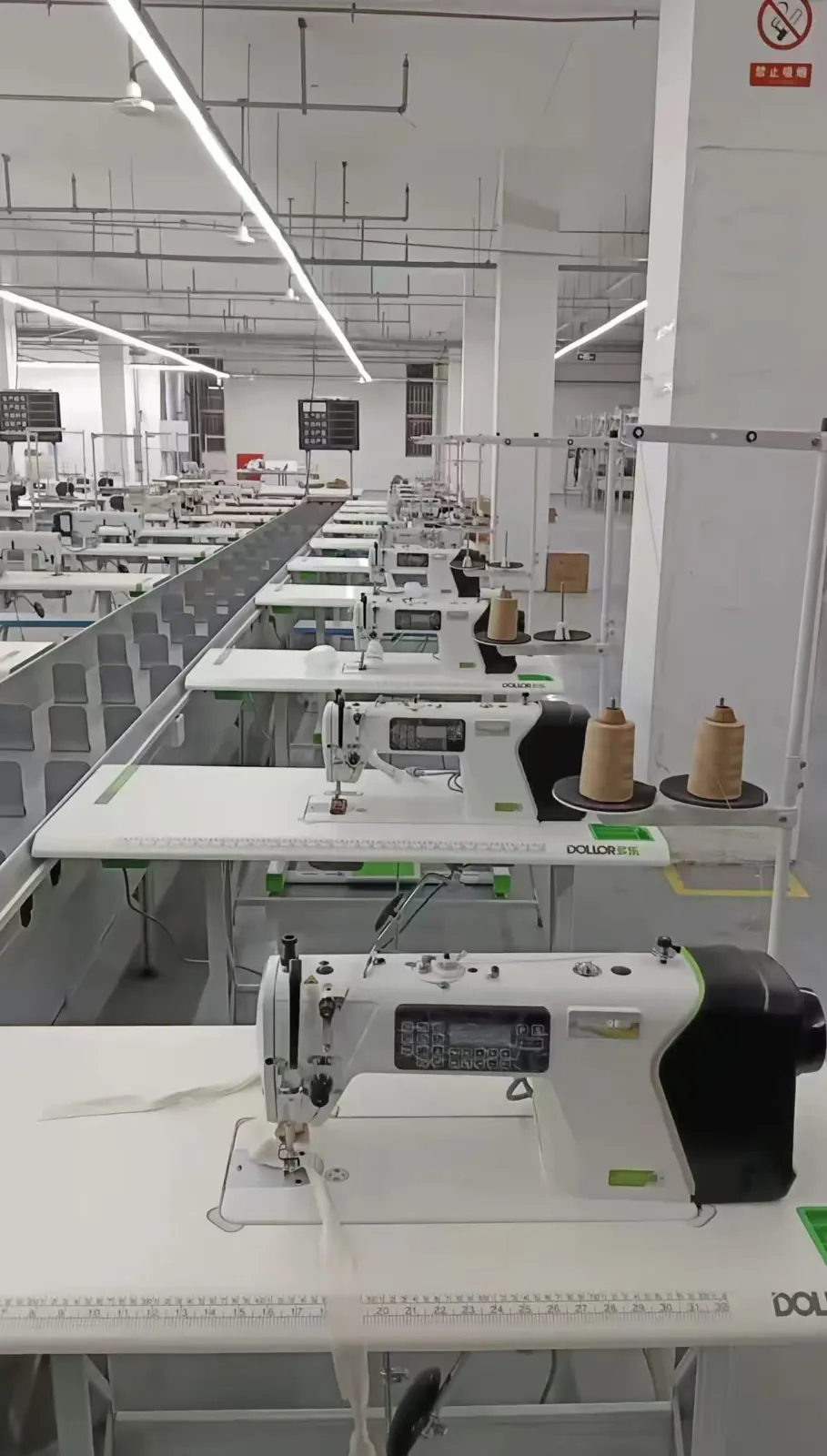
A factory is a company that produces itself: with its own machines, its own staff and its own sample room. From a distance you can only partly establish this, through the business scope on the business licence, the company name, the address and targeted questions. You only know for certain once someone has seen the running production, on site or on a live video call.

Why does the difference between a factory and a trader matter?
On platforms and in catalogues, factories and trading companies often look the same. Both show product photos, quote minimum order quantities and send an offer. For you as the buyer, the question still has practical consequences:
- Price: A trading company buys from a factory and adds its own margin. That can be worth it if it contributes something. If it only passes orders on, it simply costs you money.
- Control over quality: A trader can only influence material, workmanship and delivery date indirectly. If production deviates from the sample, resolving it goes through one more link in the chain.
- Communication: Questions about fabric, pattern or changes are relayed to the factory by the trader and come back late or shortened.
- Responsibility: When something goes wrong, it must be clear who fixes the fault and stands behind it. With several parties involved, that quickly becomes unclear.
- Changing supplier: If you only know the trader, you do not know the factory behind it. If the trader switches factory without telling you, quality may change.
So the point is not to rule out traders on principle, but to know who you are dealing with.
Are trading companies worse by definition?
No. Trading companies serve a genuine purpose in China, and for some buyers they are the better choice. Weigh it up honestly:
| Aspect | Factory direct | Trading company |
|---|---|---|
| Price | No intermediary mark-up, but often higher minimum quantities | Margin on top, but volumes from several factories can be combined |
| Range | Limited to what the factory makes | Several products or materials from one source |
| Small quantities | Often difficult, because changeovers have to pay off | Frequently more flexible, because the trader pools volumes |
| Quality control | Direct access to the line and the material | Indirect, depending on how closely the trader works with the factory |
| Export and paperwork | Depending on the factory, less export experience | Often well practised in export documents, shipping and payment handling |
| Transparency | You see who makes your product | Depends on whether the trader discloses the factory |
A trader who says openly that they are one, names the factory and provides a clear service is an honest business partner. The problem starts when a trading company presents itself as a factory. Then you pay for a quality that does not exist.
What can the business licence tell me before a visit?
Every company in China has a business licence (营业执照). Ask the supplier for a copy and look at the following details:
- Business scope (经营范围): This states what the company is permitted to do. If it lists manufacturing, processing or production (生产, 制造, 加工) of garments or textiles, that points to a factory. If it mainly lists sales, trade or import and export (销售, 贸易, 进出口), that points more towards a trading company.
- Unified Social Credit Code (统一社会信用代码): This is the uniform 18-character company number. You need it to look the company up in public registers.
- Name, legal form and legal representative: These must match the details on the quotation, invoice and contract.
- Date of establishment and registered capital: A very new company claiming decades of production does not add up. That does not mean every young company is unreliable.
It is important to understand the limits of this check. The business scope is a registration entry and does not say what actually happens. Many companies deliberately register a broad scope, and a factory may also trade. The licence gives indications, not proof.
You can cross-check the details in the public company registers, for example the national system for publishing enterprise credit information (国家企业信用信息公示系统). The company can be looked up there by name or credit code. The interface is in Chinese, so it helps if someone reads the entries for you.
What does the company name reveal?
A name alone proves nothing, but it gives first clues:
- Names containing "Trading", "Import & Export", "International Trade" or the Chinese 贸易 suggest a trading business.
- Names containing "Garment", "Apparel", "Textile" or 服饰, 服装, 纺织 point to clothing or textiles, but say nothing about whether the company sews itself.
- Names containing "Manufacturing" or "Factory" sound like production, but are easy to choose and are no proof.
Many factories also run their own foreign trade company for exports. That is common and not a warning sign, as long as the factory behind it is real. If the quotation and invoice come from one name and the production from another, ask how the two are connected.
What does the address show?
The registered address can be checked without much effort:
- Look up the address in a map application and view the satellite image or street view where available. An industrial area with workshop buildings fits a factory. An office tower in a big city fits an office or trading business better.
- Compare the address on the business licence with the one the supplier gives you for the factory. Differences can be explained, but they should be explained.
- Ask whether the office and the production are in the same place. If not, where is the production, and how far away is it?
- On a video call, ask them to show briefly out of a window or through the workshop, so that the surroundings match the map.
Again: an office address in the city and a factory in the surrounding area are normal for export companies. What matters is that the supplier explains the difference without being asked.
Which questions clarify machinery, capacity and sample room?
A genuine factory can answer questions about production specifically and without hesitation. Ask them in writing so that you can compare the answers later:
- Machinery: Which machines does the plant have, such as sewing machines, cutting, pressing stations, embroidery machines? How many of each, and how many sewing stations are there?
- Staff: How many sewers work there? Are there in-house pattern makers and cutters?
- Capacity: How many pieces of a comparable product are made per month? Which orders are running at the moment, and how much room is there for yours?
- Sample room: Is there a dedicated department for samples and patterns? Who makes the sample, and how long does it take?
- Fabric and trims: Is the fabric woven or knitted in-house, bought in or supplied by the customer? Where do yarn, zips and labels come from?
- Subcontracting: Which steps go to other companies, for example printing, embroidery, dyeing or washing? This is common, but you should know about it.
- References: What products and markets does the plant otherwise produce for, and can it show examples?
Check whether the answers fit the product you want to order. A plant with jersey sewing is not automatically the right partner for padded jackets. You will find more on the terms in the glossary of sourcing and import terms.
What do I check during a visit or video call?
During a visit or a live video you can see what documents do not show. If possible, arrange a tour without much preparation time and ask to see specific things:
- Production floor: Are machines running, are stations occupied, are there cut pieces and orders in progress? A tidy room with no activity is a showroom, not a production.
- Other customers' orders in progress: Pieces with the labels and colours of other customers show that real manufacturing takes place. Ask what is on the tables.
- Cutting and sample room: Are there cutting tables, pattern templates and sample makers on site?
- Warehouse: Fabric and trims storage, and finished cartons with labelling.
- Your sample: Ask where and by whom it was sewn. Staff on the line can usually answer questions about workmanship details on the spot.
- Staff: Who is guiding you? Does that person know the line, or only the sales conversation?
On a video call you can also ask that the camera stays live throughout and does not switch to a recording. Ask for a spontaneous pan that you choose yourself, for example "please show the workshop to the left of the entrance". The result is less conclusive than a visit, but better than a catalogue. If you cannot travel yourself, someone on the ground can go for you. How we do that is described on the sourcing page.
Which warning signs speak against a genuine factory?
A single sign proves nothing. If several add up, follow up:
- The supplier will not show a business licence or gives changing company names.
- They promise almost any product, material and quantity without asking follow-up questions.
- A visit or video tour is avoided, postponed or offered only with a long lead time.
- Photos of the "factory" look like advertising images and show no staff or running orders.
- The sample arrives surprisingly fast or in a different material than agreed, and the supplier does not mention it.
- The payment details belong to another company or to a private individual, with no explanation.
- Questions about machines, capacity or production steps stay vague or are answered with sales arguments.
- The address does not match what you would expect from a factory, and there is no explanation.
Warning signs do not mean that the supplier is dishonest. They show that you should clear up the question before you transfer any money.
What does the checklist look like?
This list summarises the checks. The more points you can substantiate, the more reliable your picture. It only becomes certain through an inspection.
| No. | Check | What you expect | When |
|---|---|---|---|
| 1 | Request the business licence | A copy is available, name and credit code match the quotation | Beforehand |
| 2 | Read the business scope (经营范围) | Manufacturing or processing is registered, not only trade | Beforehand |
| 3 | Classify the company name | Not a pure trading name, or the link to the factory is explained | Beforehand |
| 4 | Look up the company register | An entry exists for the credit code and matches the licence | Beforehand |
| 5 | Check the address on a map | Industrial surroundings, or a plausible explanation for a different location | Beforehand |
| 6 | Ask about machinery and staff | Specific numbers and machine types that fit your product | Beforehand |
| 7 | Ask about capacity and running orders | Plausible monthly volume, free capacity for your order | Beforehand |
| 8 | Clarify the sample room | In-house pattern and sample making, or clear subcontracting | Beforehand |
| 9 | Have subcontracting disclosed | List of external steps, such as printing or dyeing | Beforehand |
| 10 | Tour or video call | Running machines, occupied stations, other customers' orders in progress | Visit |
| 11 | See cutting, warehouse and packing | Own areas exist and are in use | Visit |
| 12 | Check the payee | The account holder is the company named in the contract | Before payment |
Record the results in writing, ideally with photos and dates. That helps when comparing several suppliers and with later queries. How the goods are then checked is covered in the textile quality checklist with AQL table.
What if it turns out to be a trader?
That is no reason to end the conversation. Ask openly:
- Which factory makes my product, and may I visit it or see it?
- What exactly does the trader contribute: selection, quality control, export, payment handling, smaller quantities?
- How large is the mark-up over the factory price, or can the price be broken down into its components?
- Who is liable for deviations, and how is rework handled?
If the trader answers openly, you can decide whether their service is worth the mark-up. Talking to both factory and trader can also help with the price question, see renegotiating the price with a manufacturer. If you would rather not make the distinction yourself, the guide What is a sourcing agent? explains what an agent can do and what to look for when choosing one.
How does we-source help with the check?
This is how we work. we-source is the sourcing offering of Detert & Sander Trading GbR in Hamburg. Ben Detert and Felix Sander live in Beijing. We look at the manufacturers we propose to you ourselves. We photograph the real production with sewing stations, machines and running orders, not the showroom, and you receive these photos as part of the proposals. We search for up to 15 manufacturers, look more closely at about 5 and usually propose 3 to you. We take no money from manufacturers, and you pay for the goods directly to the manufacturer.
You will find more on the sourcing and quality control pages. If you have a specific case, describe it through the enquiry.
Frequently asked questions
How can I tell whether a Chinese supplier is a factory?
From several indications together: manufacturing in the business scope on the licence, a fitting address, specific answers about machines, staff and capacity, and a tour in which you see running production. Only an inspection gives certainty.
Is the business licence sufficient proof?
No. The business scope is a registration entry and does not say what actually happens. It gives indications and can be cross-checked in the public company registers, but it does not replace an inspection.
Are trading companies in China unreliable?
No. Many provide a real service, such as selection, smaller quantities or export handling. It becomes a problem when a trader presents itself as a factory or does not name the factory behind it.
Is a video call enough to vet a factory?
It is better than a catalogue, but less conclusive than a visit. Ask for a spontaneous tour with the camera running, and have them show machines, cutting and other customers' orders in progress.
How does we-source check that a manufacturer really produces?
We look at the manufacturers we propose ourselves and photograph the real production with sewing stations, machines and running orders. You receive these photos as part of the proposals.
Co-Founder · Beijing
Felix Sander
Your contact for new brands and coordination with manufacturers. He brings together product requirements, samples and quality directly on site. He studied at Beijing Foreign Studies University and Montgomery College and previously worked in green coffee trading.